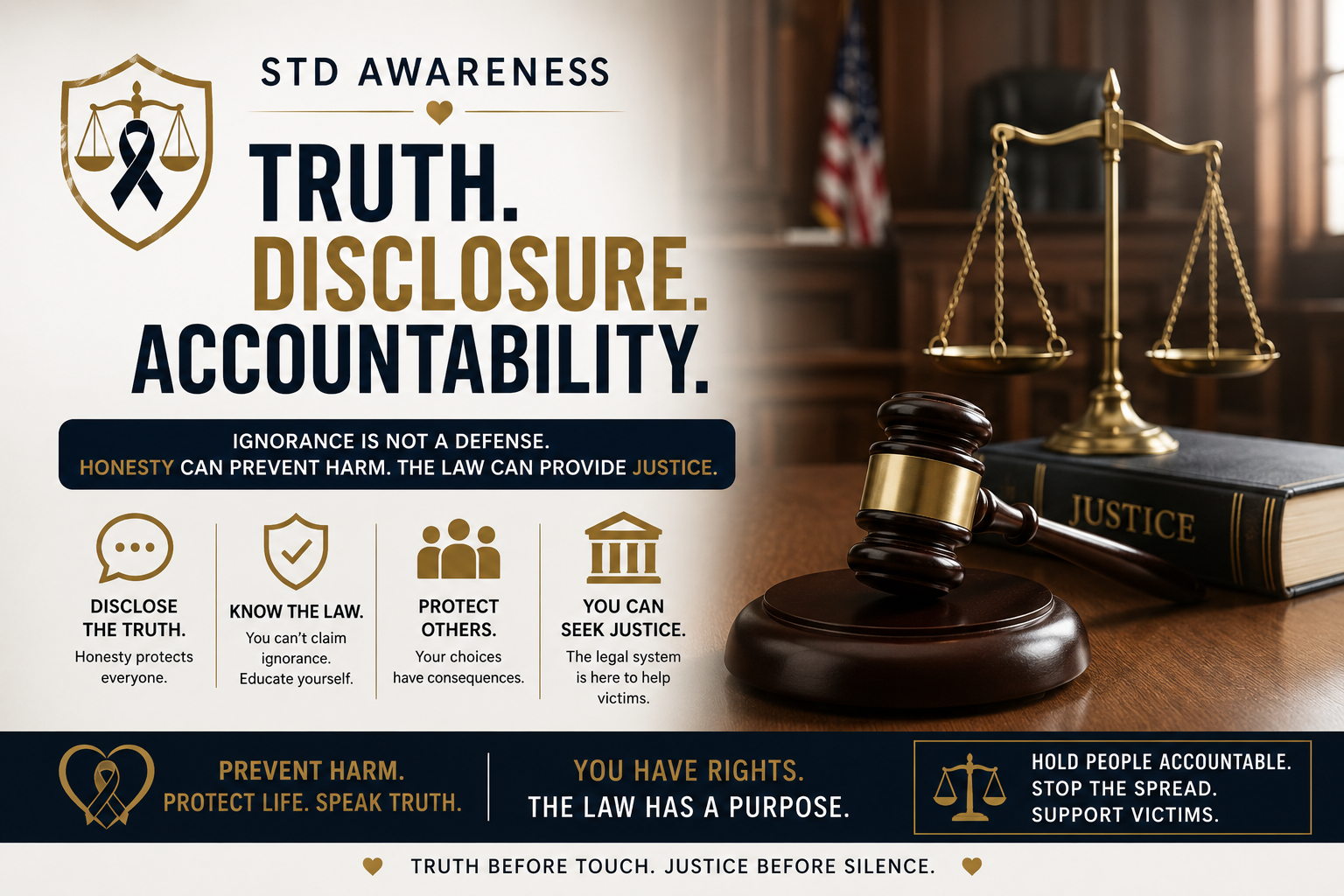
Can Honesty Prevent STD Lawsuits
Truth. Disclosure. Accountability.
Can Honesty Prevent STD Lawsuits?
Every year, people file civil lawsuits claiming they contracted a sexually transmitted disease because someone failed to disclose their infection before intimacy. These cases often involve painful questions about honesty, trust, responsibility, and the law.
Most people think these lawsuits begin in the courtroom. In reality, many begin long before a judge ever hears the case.
They begin with a conversation that never happened.
Disclosure is more than admitting a medical condition. It is giving another person the opportunity to make an informed decision about their own body and future. Whether that conversation is difficult or uncomfortable, honesty respects the other person’s right to choose.
The law cannot erase a diagnosis. It cannot restore years of emotional distress. It cannot rebuild broken trust overnight. Civil courts may award financial damages in some situations, but they cannot undo what has already happened.
The best way to avoid becoming part of a lawsuit is not simply knowing the law—it is living with integrity before legal action ever becomes necessary.
That means:
Know your sexual health status.
Seek appropriate medical care.
Understand the risks of transmission.
Have honest conversations before intimacy.
Respect another person’s right to informed consent.
Document important discussions when appropriate.
If you are uncertain about your legal responsibilities, seek qualified legal advice.
Honesty may not prevent every disagreement, but it can prevent many of the circumstances that lead people into court.
This is not about blaming people living with sexually transmitted infections. Millions of people live healthy, meaningful lives after an STD diagnosis. The issue is not the diagnosis itself. The issue is whether people are given truthful information before making deeply personal decisions.
At One of One Voice, we believe education is one of the strongest forms of prevention. When people understand their health, communicate honestly, and respect one another’s choices, they reduce not only the risk of disease but also the risk of broken trust and legal conflict.
The courtroom should be the last place people learn the value of honesty.
www.1of1Voice.com
Your Thoughts Matter… Even When Others Feel They Do Not.