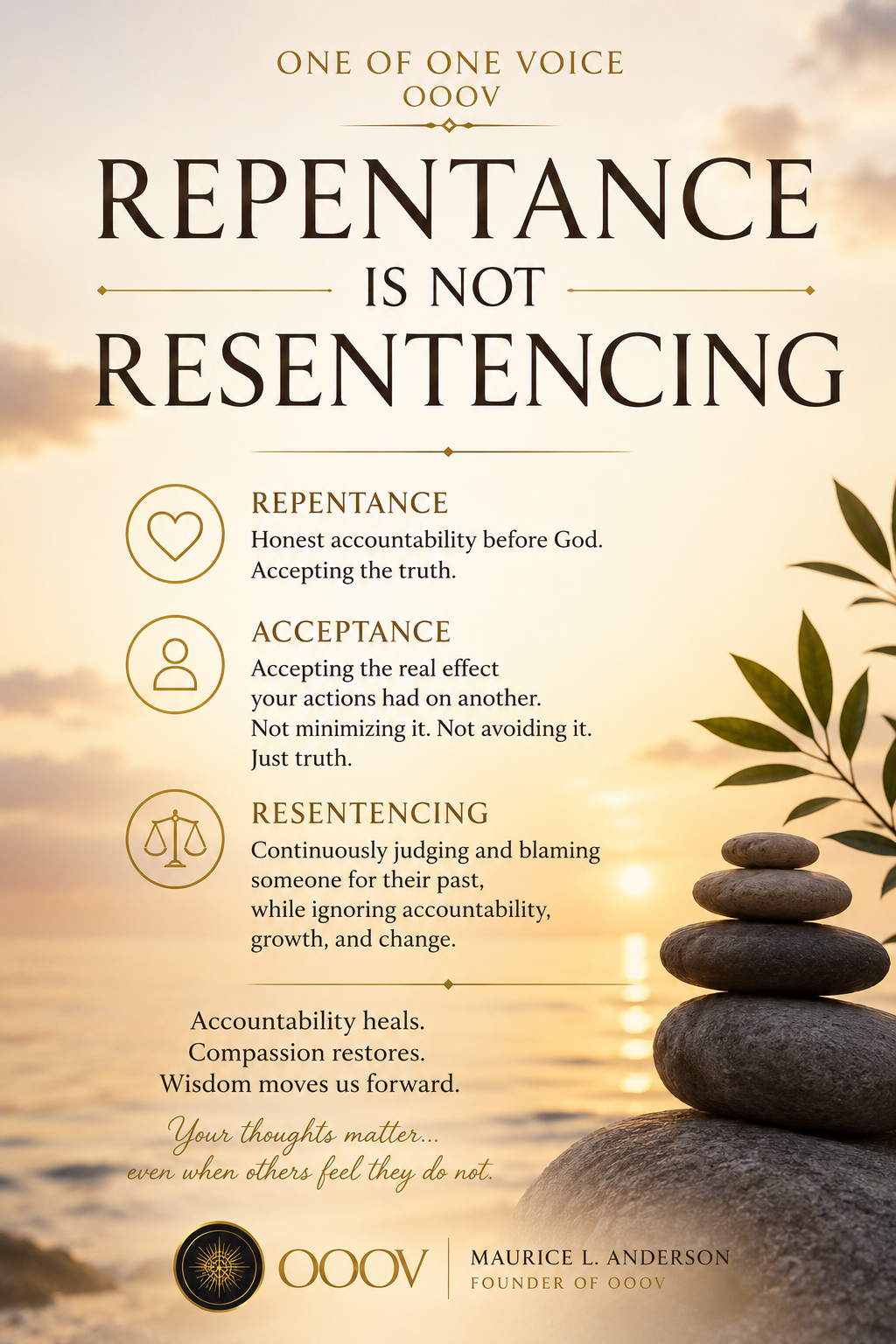
Repentance Is Not Resentencing as Judgement
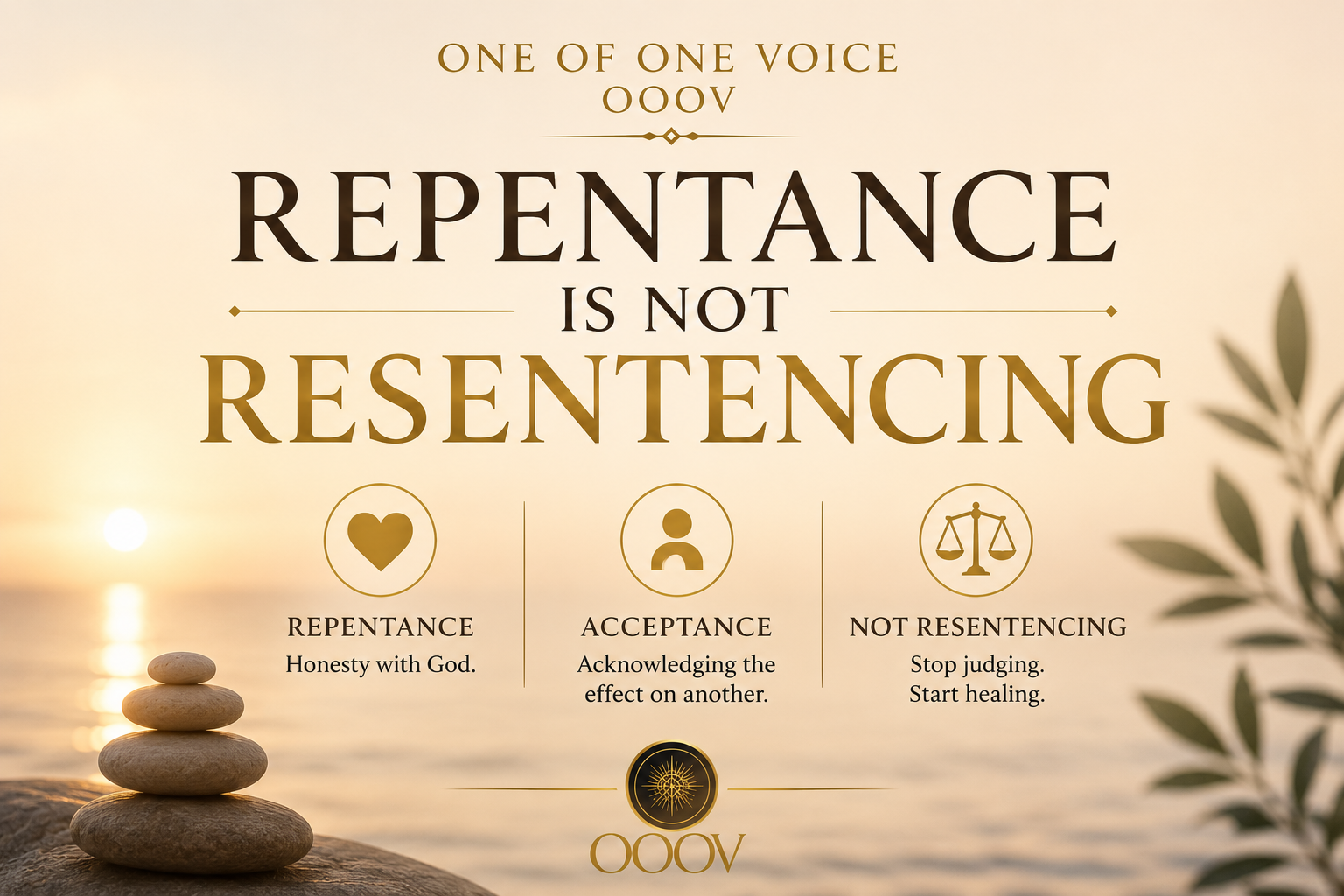
Repentance Is Not Resentencing
An OOOV Health Reflection
Passing herpes to another person can create more than a physical condition.
It can create shock, anger, guilt, fear, blame, and emotional distance.
At One of One Voice, we believe repentance in situations like this must begin with honesty.
Not avoidance.
Not silence.
Not pretending the emotional impact is small.
Real repentance means accepting that another person’s life experience was affected by your actions, choices, or lack of awareness.
That truth matters.
But there is also something else that matters:
Not resentencing people forever.
Resentencing happens when a person is judged only by the pain connected to the transmission, while every sign of accountability, remorse, education, care, or growth is ignored.
This does not erase responsibility.
It creates balance around it.
Pain deserves acknowledgment.
Blame should not become someone’s permanent identity.
Many people carry deep shame after transmission.
Others carry deep anger after receiving life-changing news.
Both emotions are real.
Still, healing becomes difficult when the relationship stays emotionally trapped inside the moment of discovery forever.
Accountability is necessary.
Endless condemnation often keeps both people emotionally wounded.
A person should accept the effect they had on another life.
But they should not become emotionally sentenced forever if truth, responsibility, and change are genuinely present.
OOOV Word Reflection
Repentance — honestly accepting responsibility after causing emotional or physical harm.
Acceptance — recognizing the real emotional effect an experience had on another person’s life.
Resentencing — continually defining someone by one painful moment while refusing to acknowledge accountability, growth, or humanity afterward.
Your thoughts matter…
even when others feel they do not.